
Is Maastricht (too) busy?
How many visitors does Maastricht receive? It seems like a simple question. Yet the answer turns out to be surprisingly complex. Recently, we compared various data sources to gain a better understanding of how Maastricht is visited. We looked at hotel stays, Dutch leisure visitors and visitor flows in the city centre. This has yielded many insights. But it has also led to an important conclusion: there is no single figure that tells us just how busy Maastricht is.
This is because each source measures something different. Hotel statistics say nothing about day visitors; the NBTC surveys Dutch leisure visitors but not foreign visitors; and the mobile data we collect via Digitwin about the city centre also includes residents and passers-by.
What do we know for certain? The number of registered overnight stays has grown significantly over the long term: in 2025, there were approximately 1.63 million, around 75 per cent more than in 2014. At the same time, the number of unique Dutch leisure visitors has remained relatively stable in recent years. Mobile data from Digitwin shows that between January 2024 and December 2025, the number of visits to the city centre increased. From April 2026, a decline is evident, whilst the total for the first half of 2026, at around 23 million visits, is roughly on a par with the same period in 2025.*
We are also learning more and more about the profile and behaviour of visitors. Six out of ten hotel guests come from the Netherlands. Among Dutch leisure visitors, we see many couples. Shopping is the single most important reason for visiting, but once here, visitors combine it with dining out, walking, heritage, events and culture. And they spend a relatively large amount: an average of €105 per person, the highest figure of the 34 cities surveyed in the NBTC study.
*Digitwin is used in Maastricht to monitor visitor flows in the city centre. Based on mobile data, the number of people passing through a number of locations is counted. A single person may generate multiple visits. When someone leaves the city centre and re-enters it later, Digitwin records this as a new visit. The count therefore includes residents, visitors and other passers-by alike.
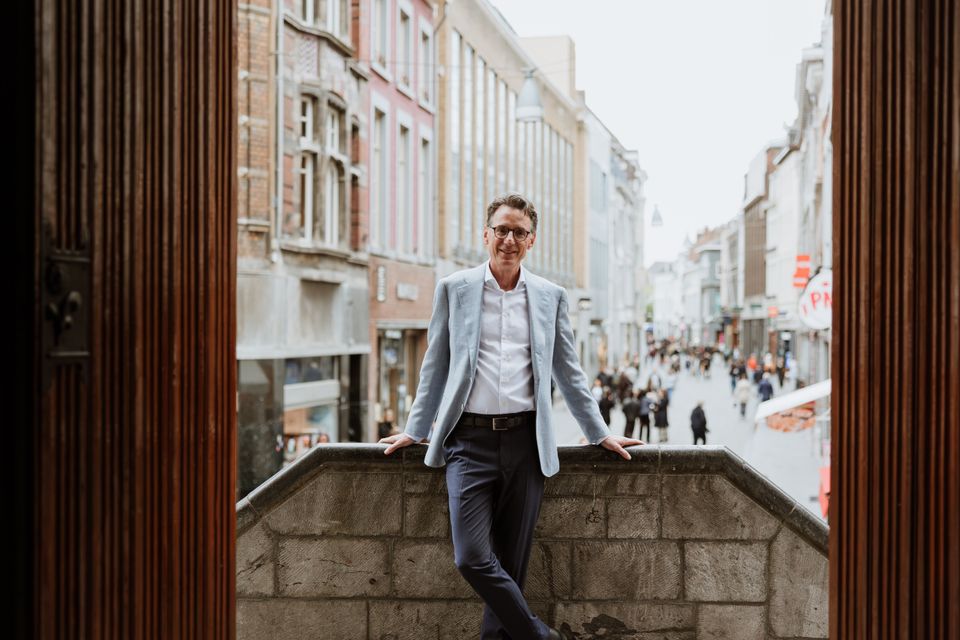
These are relevant facts, but they do not tell the whole story. Busyness is also a matter of perception. A bustling city centre can mean business is thriving for a local business owner. For a visitor, it can mean vibrancy and atmosphere. For a resident who wants to do their shopping on a Saturday, that very same bustle can be a nuisance.
We also see this distinction reflected in the public debate, where criticism is voiced about busy weekends, events and peak periods. We must take these concerns seriously. At the same time, however, this calls for a nuanced approach: crowds on a Saturday afternoon in the Grote Staat do not automatically say anything about Maastricht as a whole.
That is precisely why we do not simply look at whether there are more or fewer visitors. The key question for Maastricht Marketing is: which kind of visit contributes to the city that Maastricht aspires to be?
This means focusing on quality rather than just quantity. We aim for visitors who stay longer, discover more of the city and region, and contribute to the economy and the standard of amenities. And we aim for a spread across days, seasons and locations, whilst maintaining a balance between visitors, businesses and residents. To this end, Maastricht Marketing carefully selects what we want to showcase about Maastricht and to which target audience. Through various media, we emphasise that we are a city where you can live, work and spend your free time well. In doing so, we must also be honest about what we do not yet know. We still have limited insight into foreign day-trippers, as well as visitor flows outside the city centre and the way in which residents and visitors experience crowds.
That is precisely why we want to carry out further measurement and research. Not only to better inform policy, but also to provide business owners with better information. What are visitors looking for? What do they appreciate? Why do they return – or why don’t they? The better we understand this, the better business owners can respond to changing needs and behaviour.
After all, destination management is not just about maximising visitor numbers. It is about strengthening the city. To achieve this, we need to know not only how many people are coming, but above all what their visit means for Maastricht.
Guy Vroemen
Managing Director, Maastricht Marketing